By Steve Derderian
sderderian@massgolf.org
AUBURN, Massachusetts (March 20, 2026) – On Saturday afternoon, people at Pakachoag Golf Course had plenty of reasons to keep looking up, just as one man had done before them 100 years ago on this very same ground.
Model rockets rose from the 9th fairway in quick bursts, each launch leaving a thin trail of smoke in the breezy sky. Conversations paused, and heads tilted back. Then, just as quickly, they returned to the ground.
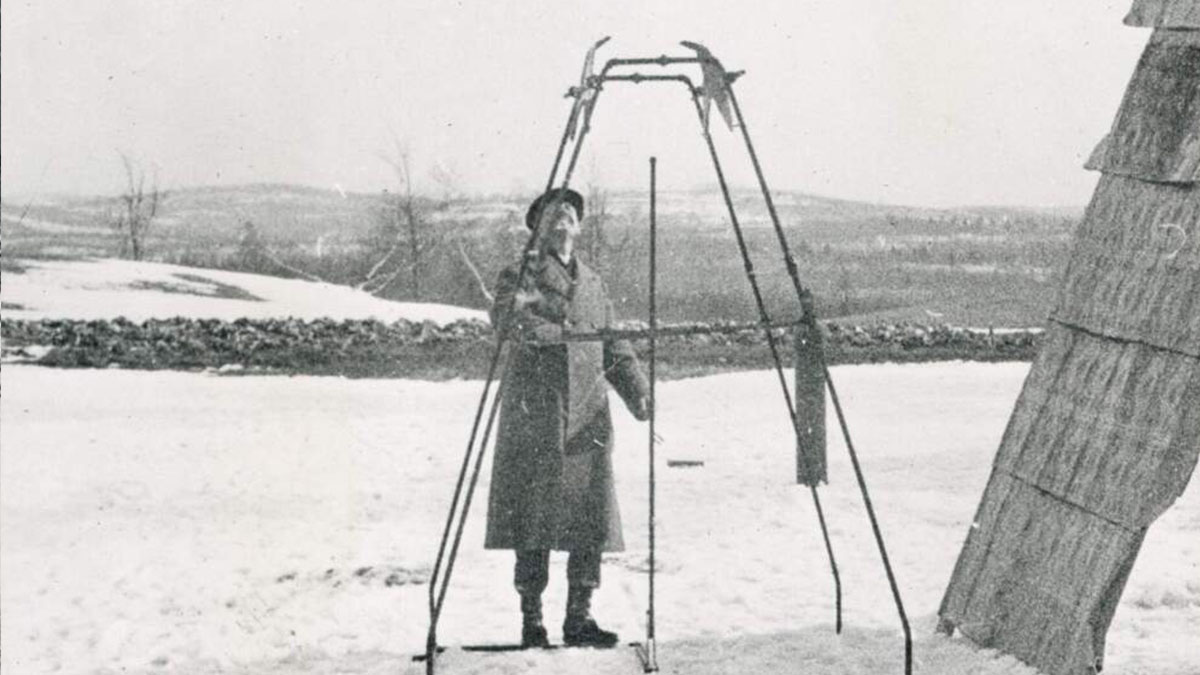
Nearby stood a replica of Dr. Robert Goddard’s original liquid-fueled rocket, its narrow frame so slight it hardly seemed capable of flight at all. A granite marker in the earth says otherwise, memorializing the exact spot where, on March 16, 1926, Goddard launched the first successful rocket using gasoline and liquid oxygen from what was then his aunt’s cabbage farm.
The flight lasted just 2.5 seconds and rose only 41 feet. By modern standards, it was almost nothing. But it proved something essential: that such a device could lift a man-made object skyward. A century later, local leaders, historians, scientists and surrounding residents gathered on the same ground to celebrate just how far those few seconds helped carry forward space exploration.
The event was initially scheduled for actually anniversary of the launch on Monday, March 16, but was rescheduled due to weather.
“I think it’s a good unifying thing to do it and to recognize Dr. Goddard and what he inspired,” said Richard Cote, who has been associated with Pakachoag since he was hired to work there by Asa Ward and his family in 1953.
View this post on Instagram
Walking the grounds of Pakachoag, it is easy to understand why it made sense as a launching site. Established as a 9-hole course in 1939, the property sits atop a broad hill in a residential neighborhood on aptly named Upland Street, overlooking the Blackstone Valley about three miles south of downtown Worcester. Its elevation, roughly 200 feet above New England’s second-largest city, and its open surroundings made it well suited for an experiment that needed both space and safety.
For Goddard, the urge to look up began long before Auburn. As a boy growing up in Worcester, he wrote how in 1899 he climbed a cherry tree and looked out over the countryside, imagining a future in which people might one day travel to Mars. He came to see that moment as a turning point in his life.
“He imagined the machine that could carry people far beyond Earth,” historian Kevin Schindler said.
Saturday’s remarks helped fill out that larger picture of Goddard, the Worcester-born physicist, inventor and engineer whose academic path took him through Worcester Polytechnic Institute and Clark University before his work reshaped the future of spaceflight.
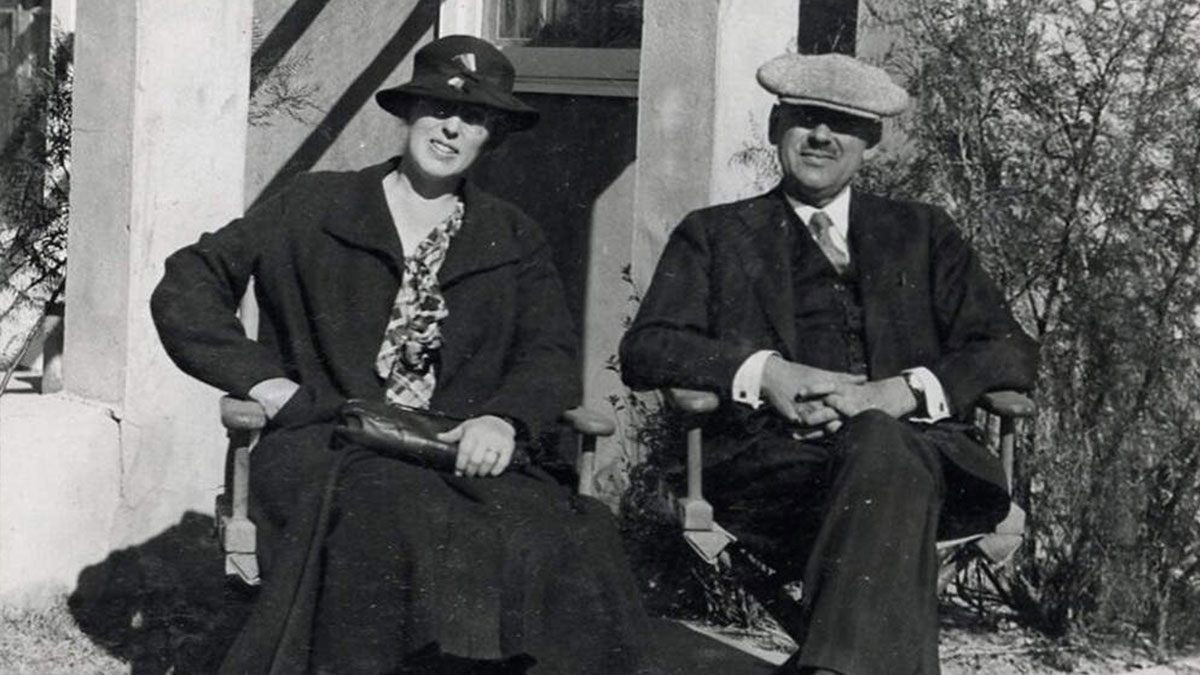
After the breakthrough in Auburn, Goddard continued building and testing rockets alongside his wife, Esther, who transcribed notes and documented launches through photographs and film. As his work drew wider attention, supporters including Charles Lindbergh and the Guggenheim family helped fund further testing in Roswell, New Mexico.
In the years that followed, Goddard helped pioneer features that became standard in modern rocketry, including nose cones, tail fins and gyroscopic guidance systems for stability in flight.
Speakers also made clear that Esther Goddard’s role extended far beyond assistance. After her husband’s death in 1945, she became one of the central stewards of his legacy, preserving the papers, images and documentation that helped ensure his story would not be lost.
In 1965, when President Lyndon Johnson declared March 16, “Goddard Day,” Esther said, “I am deeply proud and grateful for what we have done for his memory. It is far more than he, or I, might have dreamed of.”
“Basically, any photo or video we have of him, whether it’s here or New Mexico, was taken by Esther,” added Katie Stebbins, digital projects librarian at Clark.
It’s easy to lose touch with that feeling now. Most people experience spaceflight through screens, perfect camera angles, commentary that explains every second, and the ability to re-play and bring it up on demand. But standing on that fairway, watching each small rocket rise and disappear, something more basic returned: the simple wonder of seeing something manmade in-person leave the ground and fall back to earth.
That sense of wonder has long been part of Auburn’s identity, and of Pakachoag’s too. This quiet hilltop became the site of a breakthrough that helped push science beyond the imaginable. It was only 45 years later, on Feb. 6, 1971, astronaut Alan B. Shepard Jr. gave that story an unlikely golfing coda, using a makeshift club to hit two golf balls on the Moon.
And now, as the American Institute of Aeronautics & Astronautics states, “Every time you use GPS, watch a weather forecast, or look up at the night sky, you’re living in a world Robert Goddard helped build.”
Mass Golf is a 501(c)3 non-profit organization that is dedicated to advancing golf in Massachusetts by building an engaged and inclusive community.
With a community made up of over 145,000 golf enthusiasts and over 360 member clubs, Mass Golf is one of the largest state golf associations in the country. Members enjoy the benefits of handicapping, engaging golf content, course rating and scoring services along with the opportunity to compete in an array of events for golfers of all ages and abilities.
At the forefront of junior development, Mass Golf is proud to offer programming to youth in the state through First Tee Massachusetts and subsidized rounds of golf by way of Youth on Course.
For more news about Mass Golf, follow on Facebook, X, Instagram and YouTube.