Chris Francoeur is four years into chasing his PGA Tour card through one of the game’s most demanding proving grounds. An Amesbury native and two-time Ouimet Memorial Tournament champion, Francoeur seemed to unlock a new level of success in 2025, placing as high as 3rd in the Brazil Open last spring and capping his season by reaching Final Stage of PGA Tour Q-School for the first time in his professional career. At stake: five PGA Tour cards and Korn Ferry Tour status.
Though he came up just short of earning his card, the former URI and Louisville standout secured conditional Korn Ferry Tour status for the 2026 season, marking another step forward since turning professional in 2022. The week of Final Stage carried added emotions, coming just days after the passing of his grandfather, who first introduced him to the game.
Speaking with Mass Golf, Francoeur offered a candid reflection on navigating the pressures of Q-School, the mental growth that has shaped his recent progress, leaning on trusted relationships, and what lies ahead as he prepares for this season.
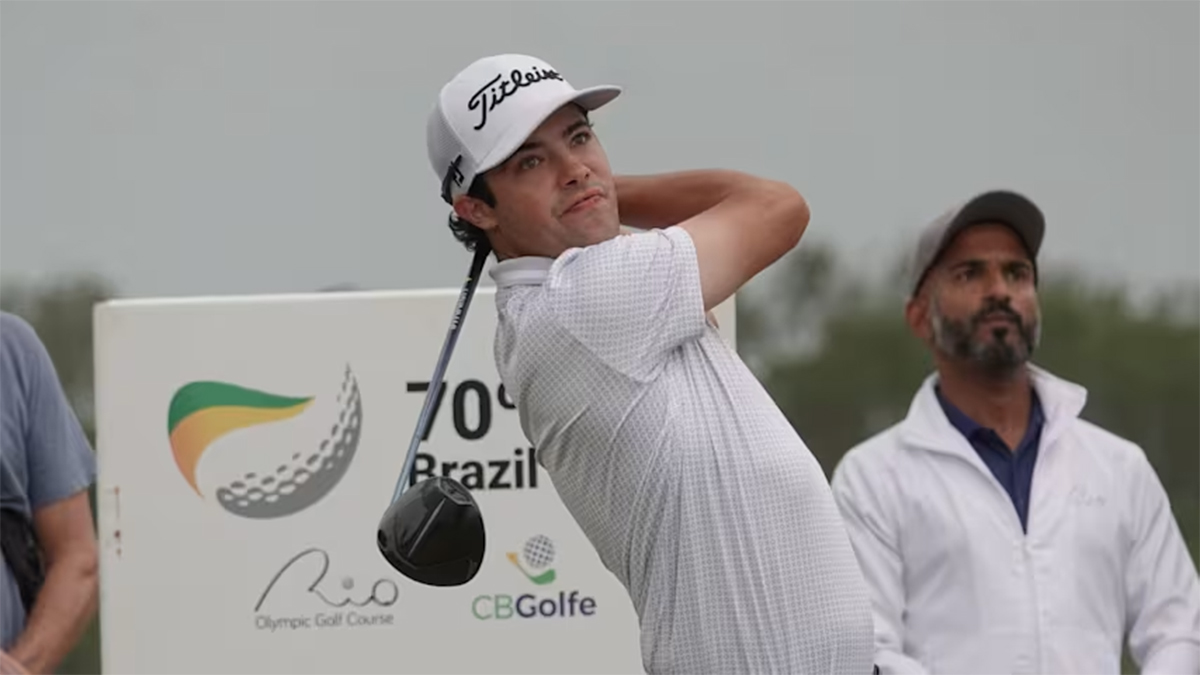
Mass Golf: What stands out to you most about making it to the Final Stage of Q-School and getting that close, knowing what’s at stake over four rounds with so many players chasing so few spots?
Chris Francoeur: It was great to be there. There’s really no golf experience like playing Q-School, so just to have a chance to play in that atmosphere was pretty cool. I feel like I was putting it pretty well, but it was first time I had had a chance to play for a PGA Tour card. Just sitting back thinking about it, how cool of an experience it was. Everybody wants to finish top five, but there’s so many guys and only five spots, so you try to play as well as you can.
MG: You posted three top-5 finishes on PGA Tour Americas. You also came into Q-School having shot 62 in the First Stage last year. Did that give you confidence heading into Q-School this time around?
CF: Every year that I played, I’ve gotten more comfortable. The pressure of Q-School is so high. I look back on that round (62) a lot to give me some confidence. You just get pretty good at handling the nerves and using past experiences to tell yourself that, that you can do it. And it’s just like any other day on the course. Using some of the past experiences has definitely helped me. going forward, especially at a week where there’s a tour card on the line.
MG: Right before the final stage started, your grandfather passed away. How did you manage the emotions of that week given what you were playing for?
CF: It was a hard week, for sure. He was the one to introduce me to the game, and I played a lot with him growing up. I found out as soon as I got off the course after my last practice round. It didn’t really hit me until after the week to be honest with you because I was so invested in what I was doing with my preparation. I honestly was just thinking that he was with me the whole week. He didn’t really get to watch me play the last couple years, because I was traveling so far. But I was just telling myself that he’s finally, was finally up there watching me play. I think he gave me a couple good bounces that week, too.
View this post on Instagram
MG: How important is it to have a caddie, in this case your former teammate and current URI assistant coach Brandon Gillis, with you to manage everything?
CF: We work great together. I’ve known Brandon for a really long time, and he knows my game pretty well. But more importantly, we kind of know each other as people really well. He knows what kind of keeps me calm out there, and what we can talk about and stuff like that. He’s just as much help with the mental stuff, like talking about clubs and reading lines. I think we work great together.
MG: How’s your mindset towards Q-School changed or just being in professional golfer compared to when you first turned pro, and looking at what it takes to get to that next level?
CF: When I first turned pro, it was like, “OK, I’m going to Q school.” You don’t really know where you stack up because I played one season in Canada. Obviously, there’s a ton of good players that didn’t have status on a tour. I think my first time playing, I made it through pre-qualifying, almost won First Stage, and then just barely missed advancing to Final Stage. At that point, I remember thinking it wasn’t that bad because I had comfortably gotten through two stages.
The year after that, though, I didn’t get through First Stage, even though I played well. The scores were just really low at the site I was at. That was also the year Michael Brennan and Johnny Keefer came out on the Americas tour, so it kind of put things into perspective. It was like, “Alright, these guys are really good, and even when you feel like you’re playing well, there’s usually someone playing better.” I think that set me into a mindset where I was going to lock in as much as I could and give it everything I had. At this level, golf is so much more than just physical, it’s very mental. So I really started diving deeper into the mental side of the game, and I think that helped me a lot.
MG: You mention improving the mental game. What’s that look like for you?
CF: Early in my career, I knew the mental side of the game was important, but I didn’t really understand it. There’s a lot of surface-level information about psychology that I was aware of, but at first I was mostly just trying to make my nerves go away. Sometimes you’re out there thinking everyone else is playing so well that they must not be nervous, but the truth is everybody gets nervous. So instead of trying to eliminate it, I started learning how to deal with it and accept that it’s going to be there. That came from reading books and diving a little deeper into the mental side of the game.
I’ve also gotten better with course management. I play a little more aggressively now, which has helped, and that comes from becoming a better golfer overall. It’s easier to take on aggressive shots when you have confidence in your swing. Guys are only getting better at this level, so you have to take risks here and there. They’re calculated risks, but that mindset has been a big part of my growth, too.
MG: From your perspective, how much tougher is the competition each year?
CF: I think it’s getting really hard because you have more talented golfers that are kind of bursting onto the scene, and at the same time, you have tours that are limiting fields and limiting cards every year. At the end of the day, I think I’m a believer that the cream will rise to the top, or whatever that saying is. Growing up around a guy like Michael Thorbjornsen, for example, we knew he was always going to make it. But there are opportunities for guys to make their way in, and it only takes playing some really good golf for a couple weeks at the right time.
View this post on Instagram
MG: Obviously, you still have proud roots here. In the summer you played in the Mass Open and even shot 59 at your home club of Renaissance this past summer. What’s it like to come home after spending so much time away?
CF: I spend most of my time in Florida now, but after playing in Canada the last three years, it’s really nice being home. The travel is easier, the weather is similar, and I get to see my family. I grew up at Renaissance and Amesbury Golf & Country Club, so I still love going back and playing those places.
Playing in the Mass Open this year was great. The course was probably one of my favorites, and I have some close friends who are members there, so I’ve been able to get out a few more times. There’s a little less pressure when you’re at home, too. It makes you think back to where it all started. I played some Challenge Cup events as a junior, but Mass Golf is really where I developed and grew up playing. It was nice to go back and compete around familiar faces.
MG: And the 59? Did you really do it despite losing a couple balls?
CF: Yeah, that round was pretty wild. I hit two balls in the hazard, and on one par 5 I hit my drive in the water, dropped, hit it on the green, and still made birdie. Then I followed that with two balls in the hazard and a three-putt bogey. Unbelievable. I don’t think I’ll ever have a stretch like that again. I think I was something like 14-under-over my last 13 holes, and even shooting 10-under on the back nine is probably never going to happen again. Normally, I can go out and shoot anywhere from 5-under to 7-under for nine holes, and that’s a great day. Going 10-under is something else.
View this post on Instagram
MG: What does your 2026 season look like?
CF: The first four events are smaller fields and then the next two events in Panama and Colombia are 144. Based on my finish at Q-School, it looks like I’m going to get into the ones that are full-field events (156). I’ll play Argentina (Feb 26-March 1) and Chile (March 5-8), and then there’s a reshuffle. If I make the cut in both and play decent, then I’m likely to probably play most of the rest of the season. If I go and I don’t play well and don’t make either the cuts, then I’m probably going to have to hope for some sponsor invites or play in some of the Monday qualifiers. And then I’ve heard there’s a couple events throughout the summer that I still could get into.
MG: The PGA Tour and Korn Ferry Tours are both underway. How do you take in pro golf when you see it from afar on TV?
CF: There’s guys that I look at that who I’ve played with, and there’s a few guys that were on the Americas tour this year that have already gotten onto the PGA Tour. I don’t think that the gap between the Korn Ferry and the PGA Tour, or the Americas tour and the Korn Ferry is really as big as people think. I think everybody that’s in the top 50 on the Korn Ferry tour could easily go out and earn a PGA Tour card. Same thing with guys in the Americas Tour to the Korn Ferry tour, like the gap there is so small. It’s just a matter of finding half a shot here or there that can make the difference.
MG: What continues to motivate you and push forward to getting your card?
CF: In golf, you never really know. A good bounce could lead to a good hole, which could boost your round, and then that can add up to a good week. It can very easily go the other way but playing well at the right time for one or two weeks can change everything, so that’s kind of what keeps me going. I know it’s in there, it’s just a matter of doing it at the right time. And winning is really hard out here, but you see guys that haven’t won, and then they win, and they keep winning. I wouldn’t want to be doing anything else, so that’s kind of what keeps me going.