Over the past three years, we’ve taken great pride in uncovering the histories of clubs from every corner of the Commonwealth that have reached the 125-year mark since their founding. While the milestone itself is admittedly arbitrary, since an extraordinary number have long since passed 100 years, it has provided a useful lens, allowing us to step back even farther in time and examine not only how these clubs came to be, but how they shaped their communities, intersected with notable people and historic events, and maintained a course that is enjoyed to this day.
In 2026, we’ll recognize two Massachusetts clubs founded in 1901, just after the turn of the century: The International and Northfield Golf Club. But rather than call it a year limited to a worthy duo, we’re borrowing a page from the National Baseball Hall of Fame and adding a few “veterans” to the collection to include some longtime Member Clubs that reached the 125-year milestone in recent years. They, of course, would’ve been recognized had we started this series earlier.
As we make up for some lost time, we encourage all readers to help preserve and share the stories of these esteemed member clubs, as well as those approaching their 125th anniversaries. If you have historic photos, memorabilia, or personal memories tied to these clubs, we’d love to hear from you. Please share more about your contributions with Steve Derderian, Senior Manager of Communications at sderderian@massgolf.org.
Northfield Golf Club hasn’t had a reservation made on its property in nearly half a century. At least not the kind that involves a room key, a bellhop and a leather-bound ledger at the front desk.
A good share of golfers who tee off here now are moving through the remains of a retreat they never saw. Before the historic Northfield Inn came down in 1977, this stretch of bucolic land drew visitors by car and rail from New York, Boston and beyond for extended stays in the seemingly undisturbed hills of Franklin County, near the Connecticut River and only a few miles from where Massachusetts, Vermont and New Hampshire meet.
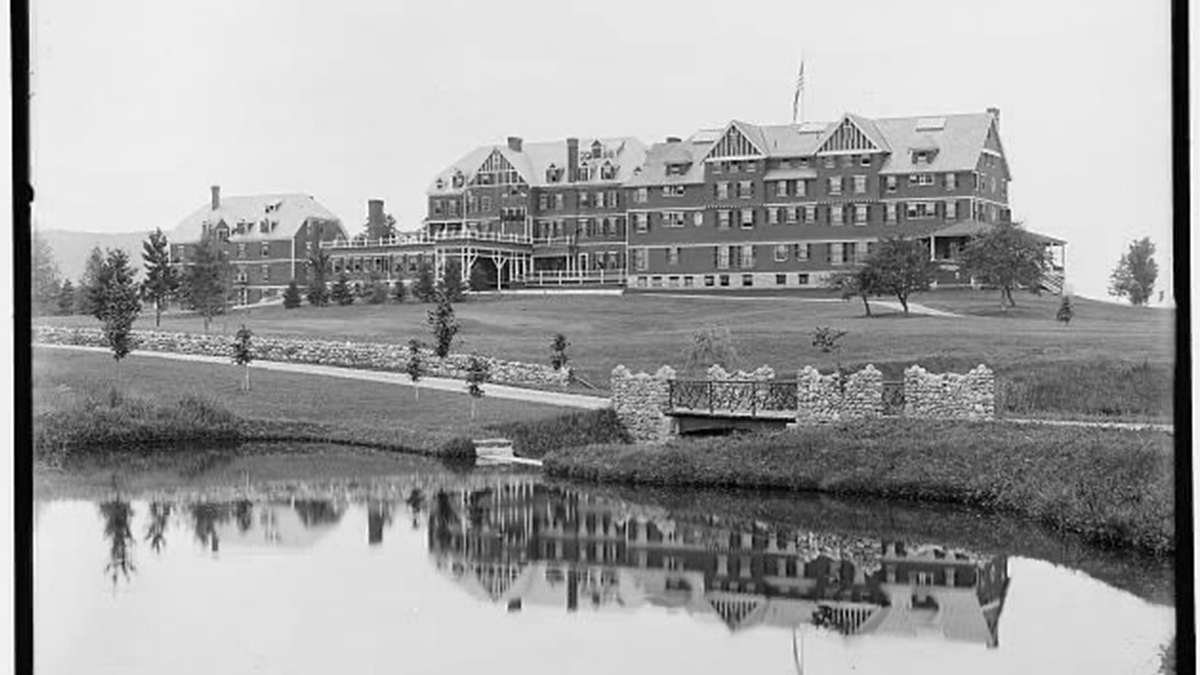
Built in 1888 near the home and schools of evangelist D.L. Moody, the inn was described at the time as a “mammoth hotel,” created by Moody’s friends not simply as a business venture, but as an extension of the schools and summer Bible gatherings that brought thousands to town. Its pale Queen Anne-style exterior, broad staircases, wide halls, open fireplaces and generous promenades gave Northfield a prominent landmark set amongst its traditional white clapboard houses tucked into the dark evergreens.
President Theodore Roosevelt spent a night here during a 1902 New England political barnstorming campaign. (No evidence he played nine). Amelia Earhart, William Jennings Bryan, Henry Cabot Lodge and Norman Vincent Peale were among the names later tied to the property. Nearby, the 99-room Schell chateau, completed in 1903 and inspired by the Château de Chambord, added another striking piece to Northfield’s reputation as a summer retreat.
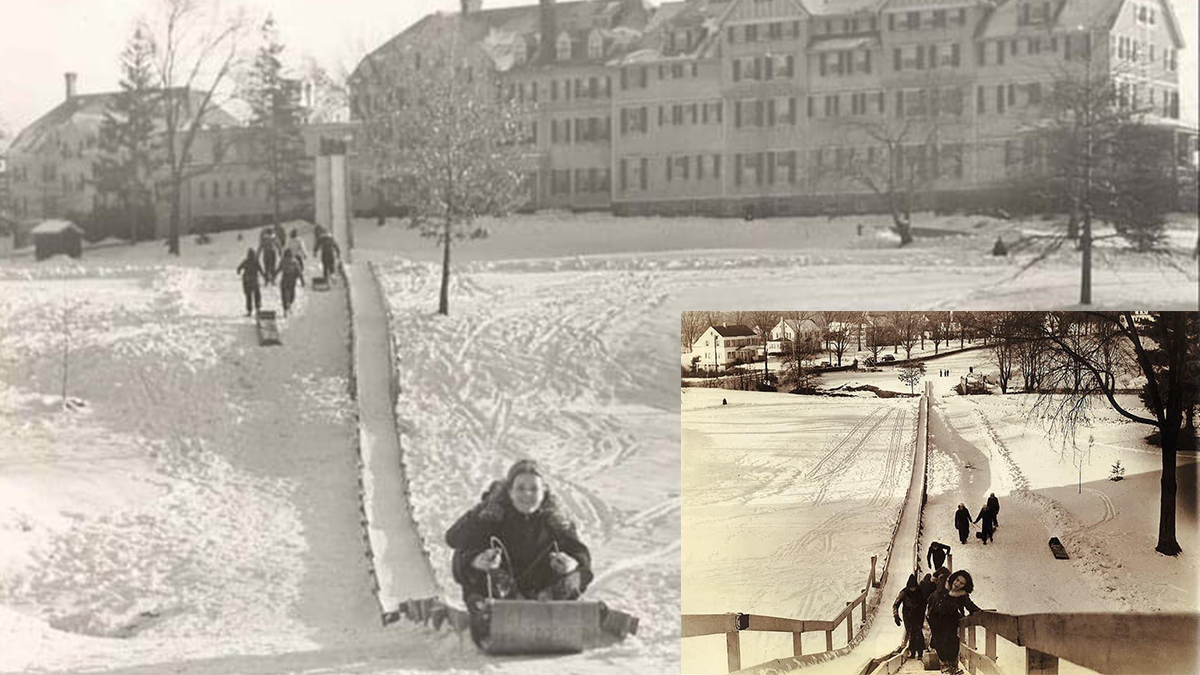
By the early 20th century guests came regularly for long stays, school visits, lectures, formal dinners, fresh air, swimming and skating on the pond, and winter activities that included a toboggan run that once pointed toward what is now one of the course’s most recognizable holes.
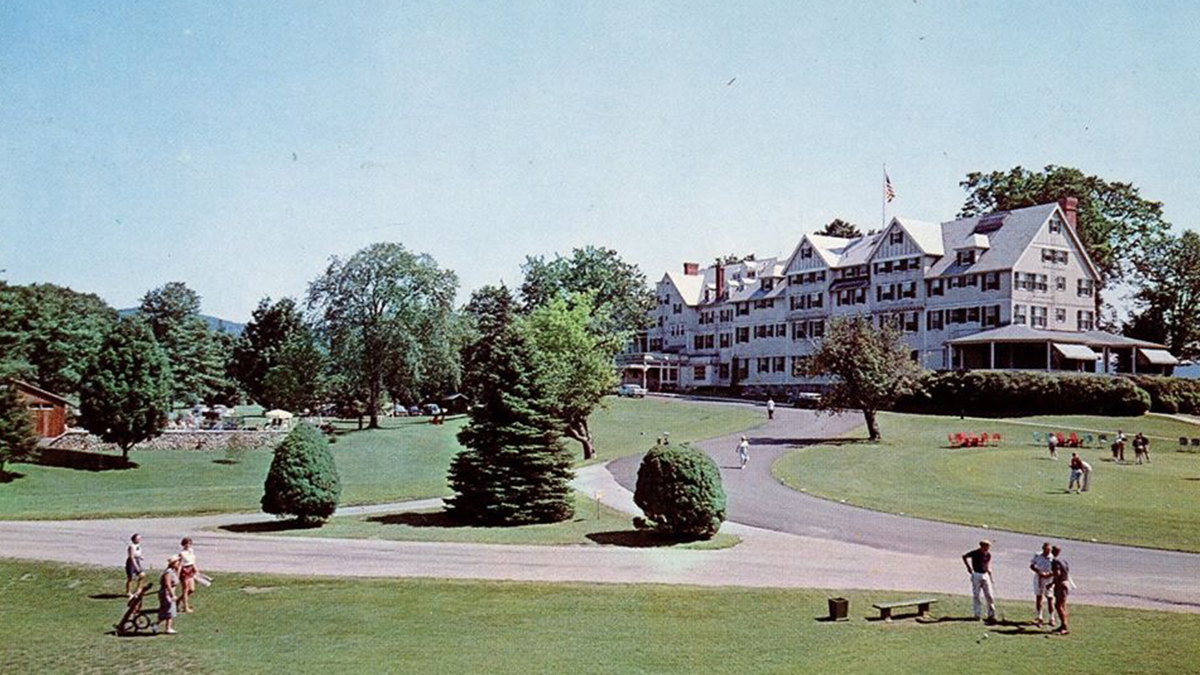
Golf joined that world in 1901. Laid out by Alexander Findlay as an amenity to the Northfield Inn, the nine-hole course gave hotel guests and local players another reason to spend time on the land. For more than 70 years, the inn and course shared the same resort landscape. Then the summer resort era faded. The Northfield Inn closed in 1976 and was torn down the next year.
The course stayed, however, and that is no small thing in this part of the state. In a remote section of the Commonwealth where destination traffic is no longer guaranteed and several landmarks have vanished, Northfield Golf Club has helped keep it on the map. After the inn era, the course continued to operate under nearby Northfield Mount Hermon School, a private boarding and day school. A local company named Snow & Sons Landscaping later maintained the property for the school before the Snow family purchased the nine-hole, public course and has managed this storied property for the past 12 years.
“It’s a hidden gem,” says club manager Shelby Snow. “It’s very accessible. It’s a course all skill levels can play.”
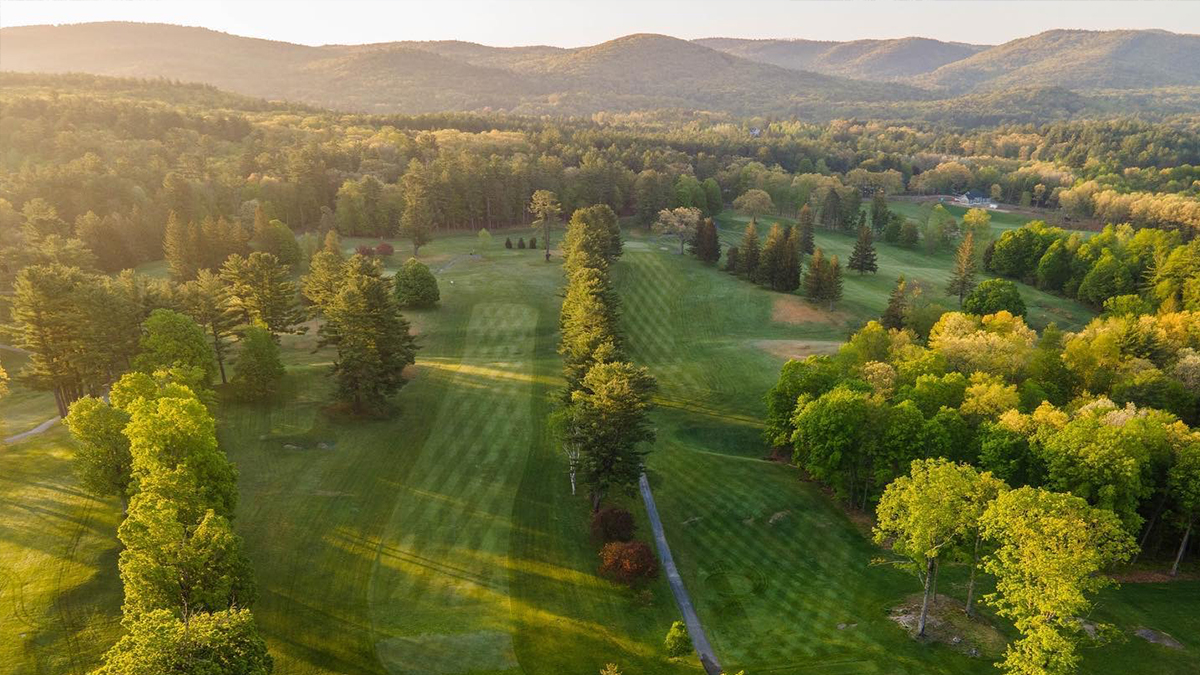
By 1901, golf was spreading throughout the region, including Findlay’s nearby design at the Country Club of Greenfield, which opened at its current location the same year as Northfield. Findlay’s original layout used the property’s natural contours, placing nine holes into a broad amphitheater formed by the hills and surrounding mountains. Early descriptions praised the course’s location, visibility, roomy fairways and clearly defined greens.
In July of that year, the Greenfield Recorder reported that the new course was already “proving immensely popular” with summer visitors and noted that W.S. Middlemass, a Scotsman with experience in the “old countries,” had been placed in charge of the course. Just as important, the club welcomed players from Greenfield and the surrounding area, including those from the border states.
In 1929, Eugene “Skip” Wogan, a renowned Donald Ross associate, renovated the course. Grass tees began replacing clay ones, green sites were adjusted and the layout was tuned up for a changing game. Yet Northfield never lost the scale that made it work in the first place.
Bill Tenney, who caddied there as a boy, worked on the course in college and later moved into the golf shop, has been connected to Northfield for roughly 70 years. He remembers the course as largely unchanged, but the old resort world around it as much more crowded with activity, when golf was just one option among many alongside tennis, badminton, pool activities, archery, and so much more.
Tenney ran putting contests for guests whether they played golf or not, played rounds with visitors (among them Celtics legend and seven-time NBA champion Jim Loscutoff) and occasionally joined them for bridge.
“Some played golf, others didn’t, and we all had a good time,” Tenney said.
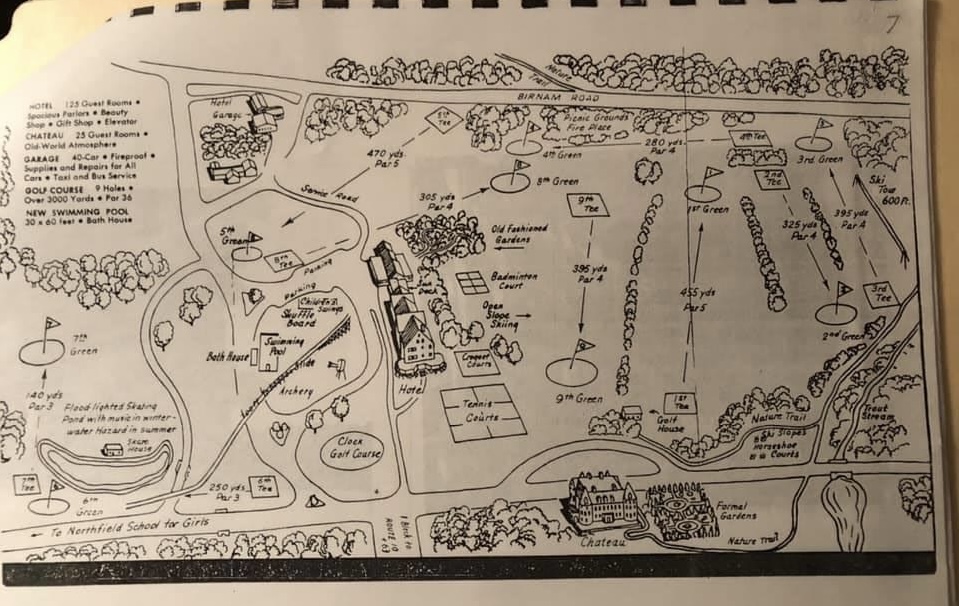
Today, Northfield remains a classic par-34, nine-hole layout, with tee shots crossing old resort ground. In an era when historic courses are often lengthened, rebuilt or reshaped beyond recognition, Northfield has largely stayed itself. Stand on the tees today and you are not looking at a modern reimagining of Findlay or Wogan’s work, but at much the same routing and green sites they selected.
Northfield plays to a modest 5,500 yards using split tees for 18 holes. Though more tee boxes have been added in recent years, the fairways are roomy, and the greens remain strategically positioned within the natural contours of the slopes. It is a place where a low running shot can be rewarded over a high-spinning wedge, all while taking on blind or semi-blind approaches, pond edges, and more.
The opening drive is a generous 425-yard par-5, though only reachable in two for players who can keep a drive between trees on the left and heavy rough on the right. Even then, the second shot is often played with the green out of sight, and bunkers wait near the putting surface. It is a gentle enough start on the card, but not a careless one.
The 2nd is a playable par 4 where a straight drive can catch the slope and roll forward into position. The approach makes you take notice of the tall natural grass on both sides of the green and woods beyond it. Then comes the 3rd, the hole most often identified as Northfield’s sternest test. The semi-blind tee-shot plays into a severely slopped fairway that may have you playing your second shot with your ball bellow your feet up toward a green with a severe false front.
The 4th, the shortest of the par-4s at 252 yards, can leave a nice short shot into the green, but several bunkers guard the front of the green, including one on the right with enough depth to make it a challenging scramble. The 5th, at 445 yards, is the longest hole on the course, a slight dogleg right framed by trees on both sides, with a bunker right of the green and the road beyond it.
Then you arrive at a place captured in countless postcards over the years. The sixth is a par-3 plays alongside the pond marked by the iconic stone walls sand the bridge giving the hole the look most associated with the club. The pond was part of the old inn landscape, used for skating in winter, with the toboggan run nearby. In golf season, Tenney remembers using a rowboat to collect balls from the water.

For member and club champion Jesse Morgan, Northfield has also provided a canvas.
Morgan, an accomplished artist and mid-amateur standout at the state level, joined the club after moving to town in 2017. His connection to the course, however, began years earlier through school matches and Monday night scratch games. During the COVID years, he helped restore the club’s hole signs and roadside sign, bringing back a hand-lettered, old-course feel.
“Those little touches add to the overall experience,” Morgan said.
The seventh is another par-3, only 131 yards, but complicated by the marshy edge of the pond and an uphill-sloping green. It is short enough to invite aggression but shaped in a way that punishes a mishit iron or wedge.
The eighth turns right from an elevated tee, with tall natural grass on the inside and a large bunker guarding the front of the green, while the ninth closes the loop with one of the straighter looks on the course. However, the fairway drops and rises again before reaching a green protected by bunkers on both sides.
“Not everybody can afford a private club,” Morgan said when reflecting on the routing. “It’s a short course, and plays like a really good par 34. You can play it a bunch of different ways. It’s fair, but it has its challenges.”

After the inn came down, Northfield Mount Hermon School kept the course going. But golf was never the school’s main business, and over time the property sought a different kind of stewardship.
That arrived in January 2014, when the Snow family purchased the club. Shelby Snow brought a background in hospitality, management, golf and events, and saw more potential in a course long admired by those who knew it but not always widely promoted.
On the golf side, the work has been swift with new drainage, irrigation, tree work, turf care, added tee boxes and steady attention to playability. The early years also included the pool and event space, before it was filled in to offer a patio for weddings, outings and community events.
“I think the town is appreciating us bringing it back to life,” Snow said.
Northfield has also benefited from golf’s post-COVID resurgence. Tee times fill up quickly, as do the leagues and charity scrambles. The club will celebrate its 125th anniversary with a two-person scramble on June 20, followed that evening by the Pioneer Valley Symphony Orchestra. Another anniversary event is planned for August 15.
For Snow, the best part of owning Northfield is less about any single element of the property than the life around the course: the regulars, staff, events and the fact that her family lives in a house overlooking the third hole.
After a nearly a lifetime around the property, Tenney has perhaps the simplest measure of Northfield’s present condition.
“It looks better than it ever has,” he says.
“In fine clear June days, the bloom of these mountains is beyond expression delightful. Last visiting these heights ere she vanishes, Spring, like the sunset, flings her sweetest charms upon them. Each tuft of upland grass is musked like a bouquet with perfume. The balmy breeze swings to and fro like a censer. On one side the eye follows for the space of an eagle’s flight, the serpentine mountain chains, southward from the great purple dome of Taconic—the St. Peter’s of these hills—northwards to the twin summits of Saddleback, which is the two-steepled natural cathedral of Berkshire; while low down to the west the Housatonic winds on in her watery labyrinth, through charming meadows basking in the reflected rays from the hill-sides.” — Herman Melville (Opening chapter of the novel “Israel Potter”)
By the time anyone thought to lay out a golf course here, the Berkshires had already shaped lives and livelihoods. These hillside villages were home to farmers, inspired artists and authors alike, and sheltered travelers, all drawn by a sense of beauty and reflection found nowhere else in Massachusetts.
When a small group of Pittsfield residents came together in 1897 to form what would become the Country Club of Pittsfield, they did so with a simple purpose: to create a place for social life and athletic exercise. What they could not have known was just how perfectly their ambition fit the land they chose.
For much of its history, the Country Club of Pittsfield has lived under those same smiling skies, the kind you might expect to find in a Rockwell painting. Set across a landscape influenced by golden-age architects Donald Ross and Wayne Stiles, it has long been a place where the game unfolds alongside something more familiar: families gathering after the round, local leaders crossing paths, and generations of members and visitors adding their verse to the ongoing story of life in the Berkshires.
“‘Home Away From Home’ speaks directly to how we want members to feel when they walk through our doors,” says Melissa Aitken, CEO of the Country Club of Pittsfield. “In practice, it means creating an environment that is welcoming, comfortable, and personal. Members know one another, staff know members by name, and there is a sense of familiarity and ease that develops over time.
“It also reflects the way members use the Club—as a place to relax, to connect with friends and family, to celebrate milestones, and to spend meaningful time together across seasons.”
Positioned as an outpost of Boston, New York, and Albany, Pittsfield has long been less a destination than a retreat, a place where travelers came to slow down, take in the fresh air, and, over time, bring pieces of the outside world with them. Among those imports around the end of the 19th century was a curious Scottish pastime just beginning to find its footing in America.
Phillip S. Honeyman emerged as one of the area’s first promoters of golf, having laid out the course at nearby Lenox Golf Club (now Wyndhurst Golf & Club). He claimed ties to Old Tom Morris at St Andrews and was bullish about the game’s potential for growth, calling it “good sport even if there is no one to go around with you.”
By 1897, a group of Pittsfield residents led by Dr. Henry Colt decided to try it for themselves, laying out a rudimentary but popular course at Overview Farm, near the club’s current location. According to the club’s centennial book, this layout had a hole stretching an astronomical 830 yards. (For reference, the old 5th hole at The International Pines Course stretched to 725 yards). Membership was open to both men and women with at least 15 women among its earliest ranks.
It didn’t take long for members to outgrow their early footprint. Seeking a permanent home, the club made a defining move when Henry W. Bishop purchased the historic Broad Hall estate and its surrounding acreage in 1900, with the club officially relocating the following year. At most clubs, the clubhouse is part of the foundation, but here in Pittsfield, the club inherited something far more rare—a place filled with famous figures and a story already centuries in motion.
Broad Hall, the late 18th-century Dutch Colonial mansion that now offers sightlines of nearly the entire course thanks to recent tree removal, rests on ground shaped by the tensions of the American Revolution. The property, once inherited by Elisha Jones Jr., was auctioned after he sided with the Crown and was ironically purchased by future Williams College trustee Henry Van Schaack, who had fled as Albany’s postmaster over his criticism of the revolutionary movement. In the Berkshires, he found a quieter refuge, once writing, “I have never lived among a more civil, obliging people.”
Over time, the estate evolved into a center of civic and cultural life. Broad Hall hosted lawyers, trustees, and prominent Federalists, including Alexander Hamilton and John Jay. In 1816, it passed to Thomas Melvill Jr. (no ‘e’ in surname), the paternal grandfather of famed author Herman Melville, who spent time on the property as a child before later purchasing an adjacent farm called Arrowhead, where he penned his most famous work, Moby-Dick.
The house continued to welcome thinkers and writers such as Henry Wadsworth Longfellow and Nathaniel Hawthorne and even served as a stop along the Underground Railroad.
View this post on Instagram
As the club settled into its new and permanent home, it found a great stroke of fortune when it landed Willie Anderson, one of the great Scotsmen who helped place Pittsfield on the early American golf map. Anderson became a four-time U.S. Open champion, two of them coming at Myopia Hunt Club in 1901 and 1905.
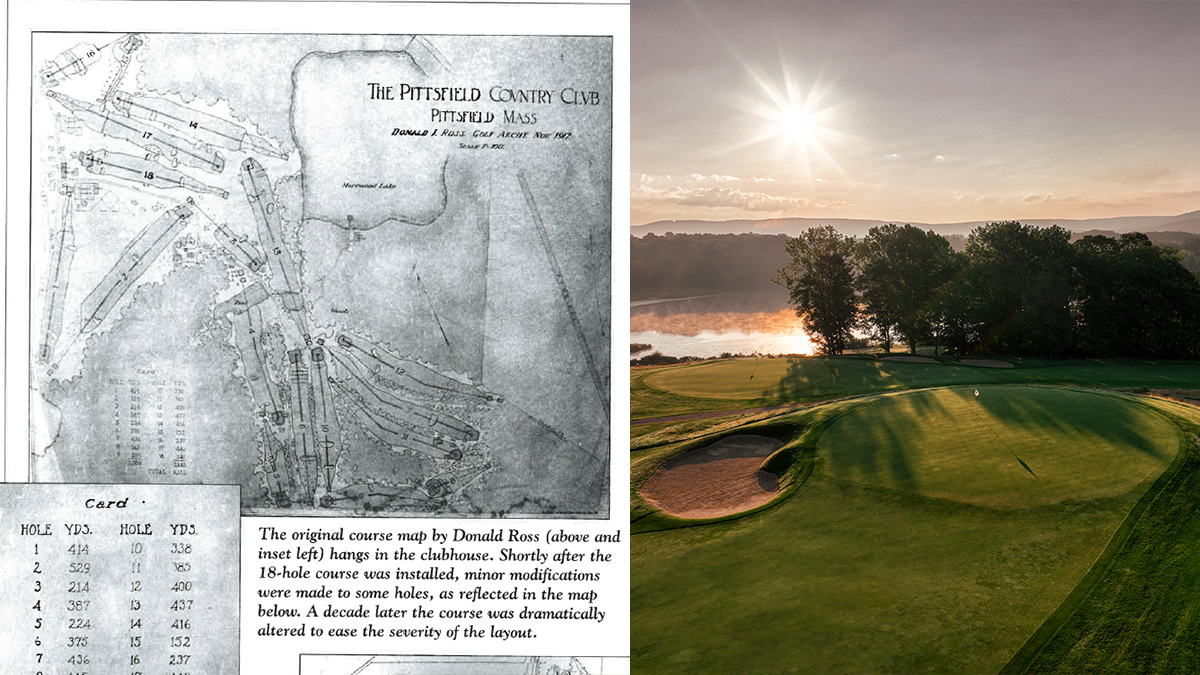
As golf evolved, so did the course. In 1917, the club engaged Donald Ross to design a full 18-hole layout. The rugged Berkshire terrain proved challenging, however, and while Ross’s work formed the foundation of the modern course, members soon found the severity of the grades demanding. Recommended changes, including raising what was then the 4th tee and 5th green, were set to cost $15,000.
The price tag and direction of the proposal led the club to search elsewhere. Drawing on their wildly successful and popular design of Taconic Golf Club, they landed on Wayne Stiles and John Van Kleek. What followed was not a light touch, but a comprehensive reimagining.
By the early 1930s, with work on the course helping sustain a solid portion of the local economy, almost all holes were rerouted, including moving the 9th tee by the clubhouse, as well as rebuilding teeing areas, greens re-positioned and bunkered, and the course reshaped to be both more playable and more engaging. Few of the holes remained as Ross had planned them, though the present 3rd hole is among the originals. The cost was $40,000, well over the Ross proposal, but also far more extensive in its lasting impact.
In fact, the layout was so on the mark that it remained largely unchanged until 1985, when the 8th hole was altered to create space for a driving range while improving course flow. In 2004, golf course architect Mark Mungeam rescaled some fairways, corrected drainage problems, expanded several greens and added bunkers to challenge the modern game. In recent years, Bruce Hepner has done more work on the bunkers, using old aerials from the Stiles era to recapture old sightlines and teeing areas and more.
You arrive at the club just south of downtown along Route 7, the artery running north-south through Berkshire County and parallel to what was once the opening hole (now the 10th) at Pittsfield.
From there, the land moves in broad, rolling sweeps, lifting you up, then easing you back down, rarely flat, never predictable, and always just enough to influence the next shot. But the most significant change in recent years has had nothing to do with altitude or yardage.
Over the past few seasons, roughly 1,200 to 1,500 trees have been removed across the property, reopening sightlines that had been closed off for decades. As head golf professional Eric Mabee explains, the course had “choked itself out” over time, and the work has brought it back closer to what it was when the land was still open farmland.
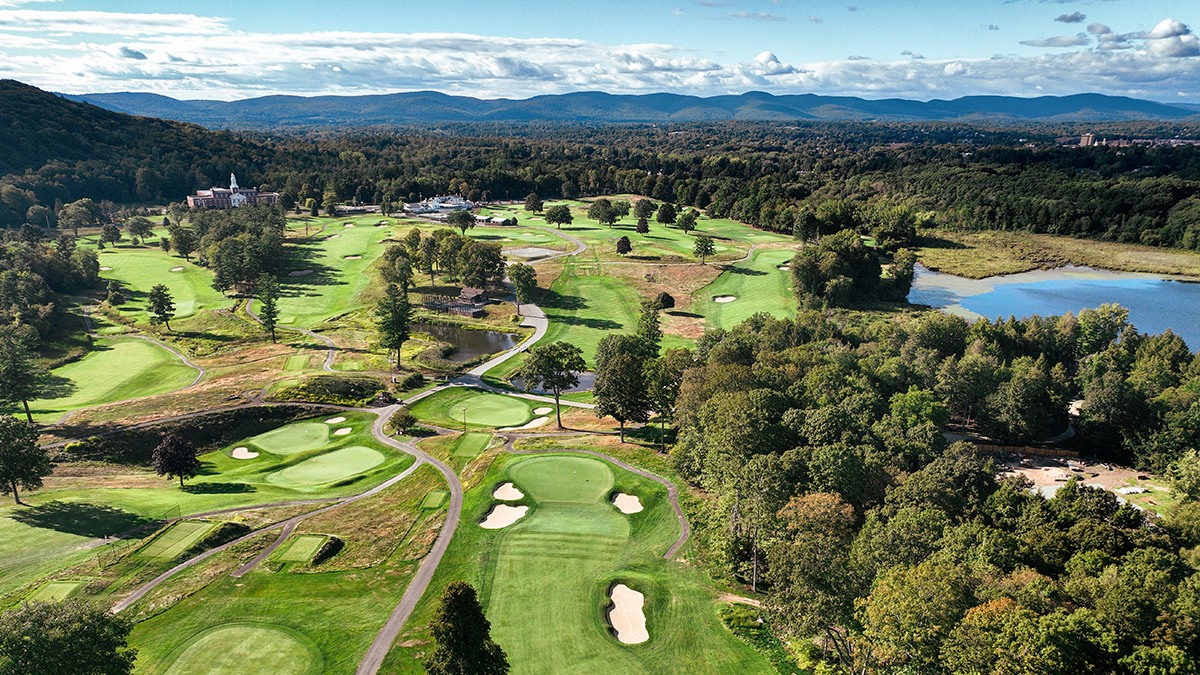
From elevated spots, the property now reveals itself in ways it hadn’t in years, with broad views across Berkshire County, glimpses of Morewood Pond, and the clubhouse returning into view again and again.
While the opening hole is largely a straightforward start without much resistance, that comfort is short-lived. The second quickly turns your attention, dropping from an elevated tee to a landing area that narrows toward a green guarded by a pond. By the 3rd, one of Donald Ross’s original holes, you take on an elevated, blind tee shot to a double tiered green guarded by bunkers on the left and a small creek to the right, however, any fairway finders will funnel down the hill leaving you with a flatter lie for your approach.
After climbing back up to play the 5th, which tips out at just 297 yards, you reach what Mabee calls the “million-dollar view” from the par-4 6th tee, which stretches out across the county. Playing downhill, local advice calls for you to aim for the three smoke stacks on the horizon, with the second shot playing significantly downhill to an original green with extremely large breaks that call for extra special attention with your putter in hand.
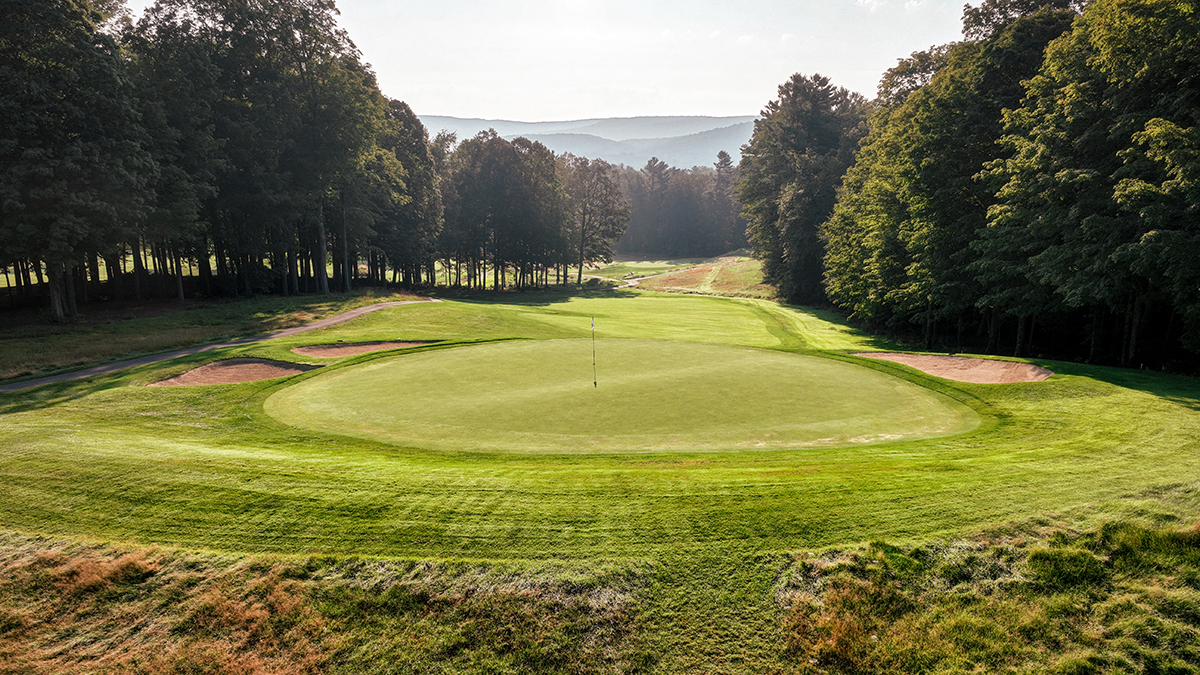
Driver comes more in play on the straightaway 7th and again on the dogleg left 8th, which tees off along Morewood Lake and is the longest hole at 562 yards. Long hitters may be able to cut the corner, but this is largely a three-shot hole. The front nine ends with a potentially picturesque par-3 set back alongside the road.
The back nine climbs into the strongest part of the property, and nowhere is that more apparent than the 12th where hazards lurk on both sides of the fairway. The second shot rises steeply, with shorter hitters facing between about 130 and 150 yards on average. But then you get the elevation right back as well as another photo opp.
Aiming toward a green that neighbors the 6th, the 13th hole tumbles down about six stories and plays about 20 to 30 yards less than the yardage (121 to 162 yards), framed by the grandeur that is the Berkshires.
In the recent past, 14 was an extremely scorable par-5 but has been dialed back to a long but downhill par-4, while the 15th was lengthened into the far corner of the course with a generous landing area. Another par-5 awaits on the 16th, which also allows a view of nearly the entire course, but it requires a semi-blind second shot, toward a green that is difficult to keep beneath the hole. Long and short is the miss on the straightaway par-3 17th, which then wraps around to the 18th, where birdie is definitely in play. At 330 yards, Mabee says it’s a mid-iron layup or a drive that takes on the front edge.
But just as you begin to walk to the final tee, Mabee says you get one last chance to, “see the whole thing again and say thanks.”
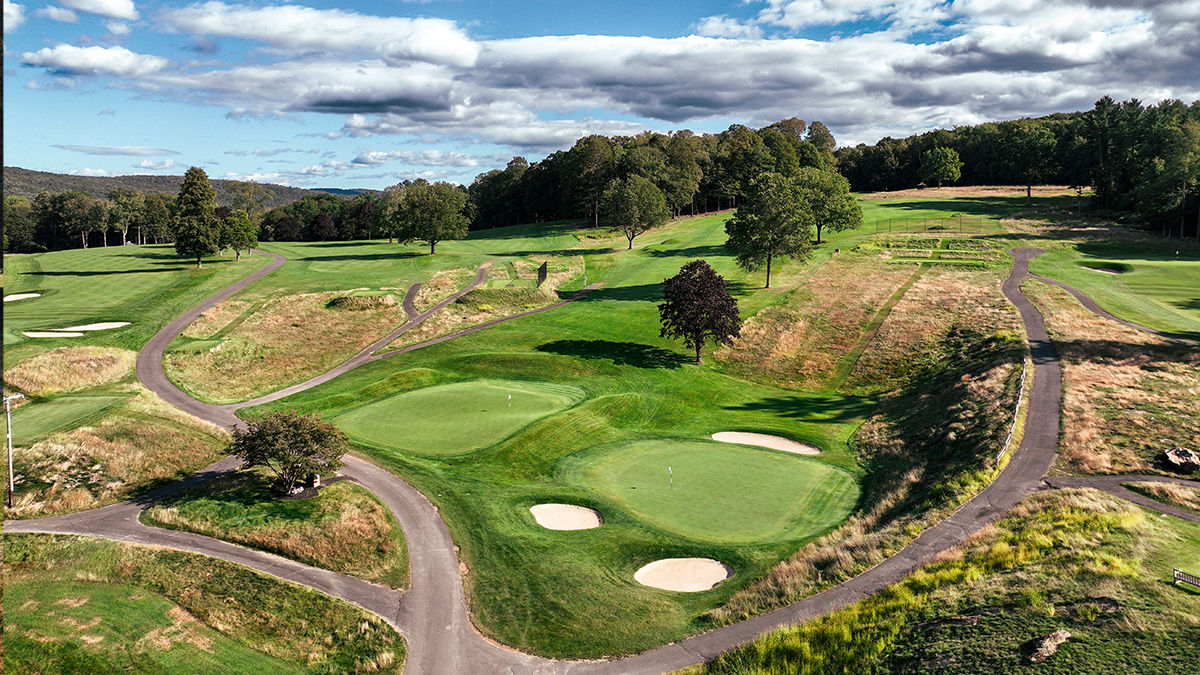
Several of the game’s major champions passed through Pittsfield in its early years, including Gene Sarazen, Lawson Little, and Julius Boros, along with Massachusetts Golf Hall of Famer Bob Toski. Many of those visits came in the form of exhibition matches, bringing a national spotlight to what was, even then, a quietly respected club.
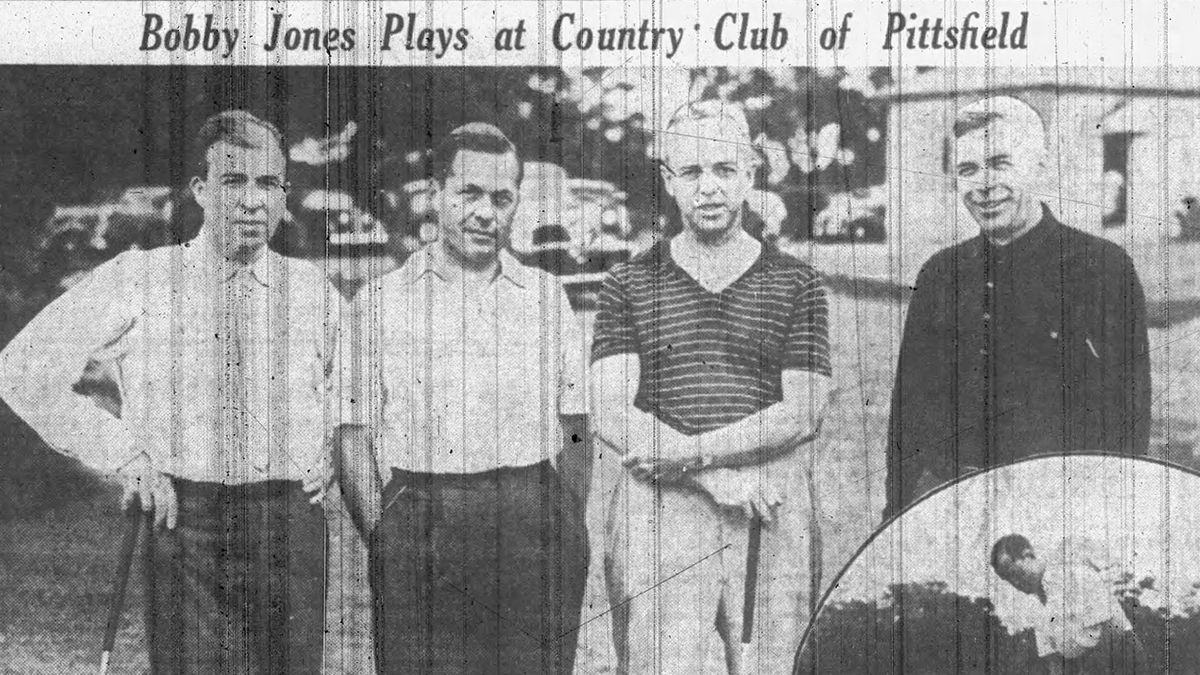
But the most enduring connection belongs to Bobby Jones. In 1937, just three years after co-founding The Masters, Jones purchased the Berkshire Coca-Cola Bottling Company, one of several plants he owned as part of a broader Atlanta-based network. His ties to Western Massachusetts, however, predated that investment. Following his retirement at age 28, the Harvard-educated Jones became affiliated with A.G. Spalding & Bros. in Chicopee, working to develop a matched set of steel-shafted clubs under his name.
On July 28, 1937, Jones played Pittsfield for the first time, carding a 1-under-par 69, making five birdies despite finding water on the back nine, offering a local glimpse of his enduring brilliance despite stepping away from competitive golf. His son Robert T. Jones III would later join Pittsfield and win 10 club championships in total.
While visiting professionals often drew the headlines, one of the club’s most memorable exhibitions came from Joyce Wethered. The English star who was playing captain in the inaugural Curtis Cup in 1932 and was later inducted into the World Golf Hall of Fame, arrived in August 1935 and delivered a performance that lingered long after. Paired with member W. Prince Smith, she shot 70 in front of roughly 400 spectators, lowering the course record by eight strokes and narrowly missing a 7-foot putt on the 18th for a 69.
“Those who witnessed the exhibition never will forget it,” one account noted.
Her reputation only grew from there. Jones himself called Wethered “The greatest shotmaker, man or woman, who has ever played golf,” a judgment shaped in part by a match the two played at St Andrews, where he edged her by a single stroke.
Pittsfield has also seen the likes of multiple longtime professionals, with 38 years from Gilbert Middleton to more recent decades of personable gentlemen in Jim Simes (1960-1978) and Brad Benson (1982-2014), who both made a tremendous impact in working with juniors to grow the future of the game.
Middleton stepped down as pro but took over as superintendent just in time for the playing of the 1954 Massachusetts Amateur Championship, the first signature Mass Golf championship hosted by the club. Rupert Daniels, a hardware manufacturers’ representative who grew up in Adams, defeated fellow 31-year-old Dave Sullivan in the final, 2-up, becoming the first Berkshires-raised player to win the title. In 1984, UMass graduate Jim McDermott edged out then-19-year-old Geoff Sisk, 2&1, by sinking a 15-foot birdie putt on the 17th, giving him his second title (also 1980, Salem CC).
Pittsfield also hosted the Mass Open in 1960 and 2000. Bill Ezinicki, the former NHL star turned cigar-smoking PGA Professional, had a banner year in 1960, earning state open titles in Rhode Island, Maine, and New Hampshire. He added a fourth in September, firing a 1-under 69 in the final round to edge out former U.S. Amateur winner Ted Bishop. Like McDermott in 1984, former Nike Tour pro James Gilleon made a long, clutch birdie putt on the 17th to win the 2000 Mass Open by one stroke over longtime New England pro Kirk Hanefeld.
Along with regional hosting duties in partnership with the Berkshire County Allied Golf Association, Pittsfield has also welcomed far-reaching talent on an annual basis. In addition to its club and member-guest events, the club’s Ladies Invitational, which draws players from across the region, is turning 70 this year.
In terms of top talent, the club has hosted Mass Open qualifying for several years running, and last fall hosted U.S. Four-Ball Qualifying, drawing hopefuls from across the East Coast.
Among the many major supporters of events like these was the late Andy Blau, a lifelong Country Club of Pittsfield member, whose name is attached to the Volunteer of the Year Award given each year. Blau served as a volunteer Rules Official, also contributing to course rating, handicapping, junior golf, communications, and just about any way you could think of in the local and statewide golf communities.
It’s people like Blau, those before him and those who have followed, who have carried the club forward, maintaining its traditions while allowing it to evolve with each generation.
“The Country Club of Pittsfield has endured because generations of leaders and members understood that sustainability is not about standing still, it is about making careful, values-driven decisions that respect the past and prepare for the future,” club CEO Melissa Aitken said. “By continually reinforcing the sense of community that defines this Club, while making strategic improvements that keep it relevant, we have been able to remain strong, vibrant, and meaningful for more than a century.”
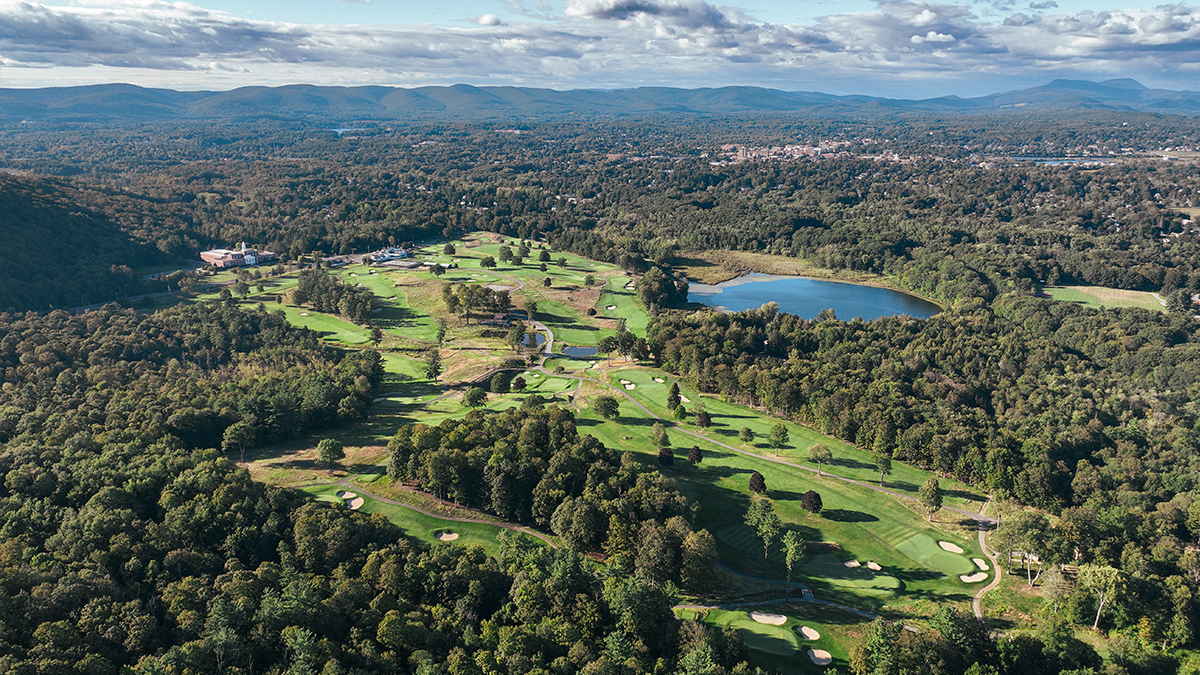
Mass Golf is a 501(c)3 non-profit organization that is dedicated to advancing golf in Massachusetts by building an engaged and inclusive community.
With a community made up of over 145,000 golf enthusiasts and over 360 member clubs, Mass Golf is one of the largest state golf associations in the country. Members enjoy the benefits of handicapping, engaging golf content, course rating and scoring services along with the opportunity to compete in an array of events for golfers of all ages and abilities.
At the forefront of junior development, Mass Golf is proud to offer programming to youth in the state through First Tee Massachusetts and subsidized rounds of golf by way of Youth on Course.